
The Vice President for Academic Affairs at the University of Kurdistan has announced the expansion of academic programs, the upgrading of laboratory facilities, and the establishment of a Virtual Examination Center to enhance educational quality. Outlining the university’s macro-strategies, he emphasized that achieving educational equity, fostering pedagogical transformation, strengthening scientific authority, and advancing toward internationalization are the fundamental pillars of the university’s strategic roadmap.
Educational Equity and Internationalization: The Axis of Transformation in University Pedagogy
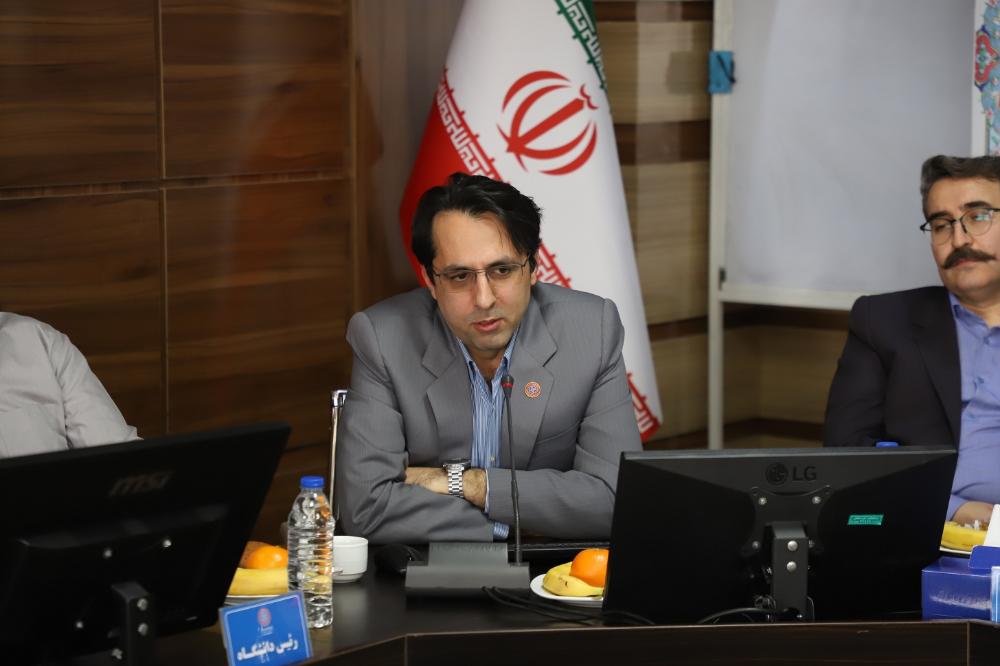



According to the University of Kurdistan Public Relations, Dr. Mohammad Razzaqi stated during the University Council meeting on Monday, February 9—attended by the Vice Minister for Educational Affairs of the Ministry of Science, Research, and Technology—that establishing a precise statistical system is a priority. He noted that an "Educational Statistics Center" is being launched to resolve data inconsistencies and ensure evidence-based decision-making. Regarding the current academic landscape, Dr. Razzaqi noted: "The University of Kurdistan currently offers 204 academic programs, including 67 undergraduate, 122 master’s, and 34 doctoral programs." He also addressed the state of laboratory infrastructure, noting that essential needs have been identified and official correspondence for the renovation of depreciated equipment is underway.
Dr. Razzaqi highlighted the successful administration of the current semester's virtual exams and the launch of a 24/7 student support system. He further noted innovative curricular initiatives, such as the development of "Passive Defense" and "Disaster Preparedness" courses in collaboration with provincial authorities. Concluding his remarks, the Vice President addressed the development of new disciplines, stating that the establishment of a Master’s program in "Kurdish Language and Literature"—a significant regional demand—is in its final approval stages. Furthermore, the introduction of a "Stone Industry" program, focused on vocational skills, is on the agenda. The meeting concluded with faculty members discussing existing challenges and proposing solutions.


Quick Links
Electronic Services
Useful Links

University of Kurdistan, Pasdaran Boulevard, Sanandaj, Iran

Postal Code: 6617715175

Phone: +988733664600-8

Email: info@uok.ac.ir


site visit
- today:
- yesterday:
- all:
Last Update
12 Feb 2026 - 11:48:07