
The Vice Minister for Educational Affairs of the Ministry of Science, Research, and Technology, during a meeting of the University of Kurdistan Council, underscored the imperative of enhancing educational quality and resource productivity. He emphasized the pivotal role of universities in addressing societal challenges and leveraging scientific capacities to serve the public.
Increasing the Number of Universities is Insufficient; Educational Quality Must Be the Priority
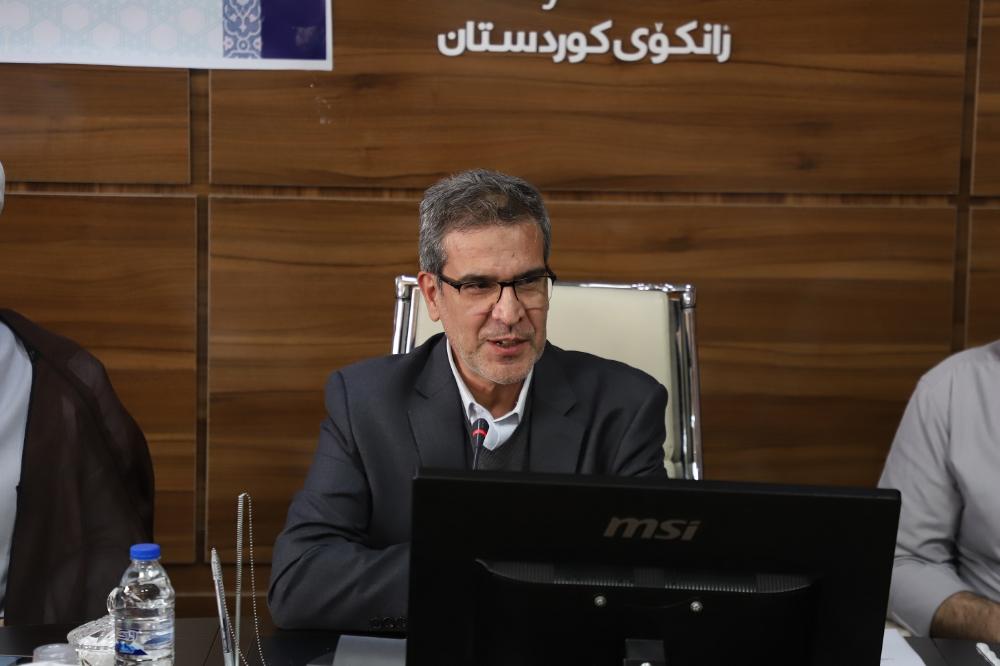



According to a report by the University of Kurdistan Public Relations, Dr. Abolfazl Vahedi expressed his gratitude for the hospitality and dignity of the people of Kurdistan Province during the council meeting. Emphasizing the significance of qualitative development and efficiency in higher education, he remarked: "It is our hope that the University of Kurdistan, given its immense human capital, can achieve its rightful stature at both national and regional levels."
Referring to the administration of examinations in the previous semester, he noted: "As you are aware, the September exams were delayed, and the commencement of the new semester faced certain challenges. Despite the provision of infrastructure, the quality of examinations and educational equity were not fully realized due to limitations in student access to the internet and modern smart educational tools." The Vice Minister expressed hope that through improved planning, the upcoming semester would offer a more successful experience for both students and faculty.
Commemorating the anniversary of the Islamic Revolution and the memory of the martyrs, Vahedi highlighted the roles of sincerity, faith, and the people's trust in Imam Khomeini (RA) in the formation of the Revolution. He noted that the Iranian educational system has undergone profound transformations since the inception of the Revolution.
Reviewing the history of the University of Kurdistan, he stated: "The activities of this institution began in 1974 (1353 SH), and in 1976 (1355 SH), it commenced operations as a teacher training college affiliated with the University of Kermanshah. In 1991 (1370 SH), it gained independence as a university. The seedling planted then has now evolved into a venerable tree, the fruits of which benefit the city of Sanandaj, Kurdistan Province, and the western region of the country; its status will continue to ascend in the future."
Addressing the trajectory of higher education development in the country, he observed: "Since the Revolution, the growth of universities and disciplines has occurred at a rapid pace. However, quantitative development without due regard for quality and efficiency is insufficient."
Dr. Vahedi stated: "Currently, there are over 1,800 higher education institutions, including public and private universities and institutes, across the country. During the peak of university expansion, the student population reached approximately 4.4 million; today, this trend has declined to 3.3 million. This indicates that merely increasing the number of institutions and programs, without responding to the real needs of society and students, is not enough and requires smart management and precise planning."
He continued: "The decline in student enrollment is due to several factors, including demographic shifts and changing paradigms in the modern era. Today, perspectives on education and the mere acquisition of university degrees have shifted toward skill-based learning and vocational training."
Regarding the status of the University of Kurdistan, he noted: "To address space and classroom constraints, course scheduling has been reorganized. Through proper planning, better utilization of educational spaces has been facilitated." He emphasized that establishing centers for educational excellence, transitioning from traditional to modern pedagogy, utilizing educational software and technology, and shifting student perspectives toward learning are critical priorities for universities in enhancing educational quality.
Furthermore, he addressed the budgetary constraints of higher education, stating: "The share of universities from the total national budget is less than one percent. This has created limitations in securing resources for infrastructural development. Consequently, it is essential for universities to continue their path of progress through optimized management, the acquisition of new resources, and increased productivity."


Quick Links
Electronic Services
Useful Links


University of Kurdistan, Pasdaran Boulevard, Sanandaj, Iran

Postal Code: 6617715175

Phone: +988733664600-8

Email: info@uok.ac.ir


site visit
- today:
- yesterday:
- all:
Last Update
12 Feb 2026 - 11:48:07