
The 14th Iranian Horticultural Science Congress Concludes in Sanandaj
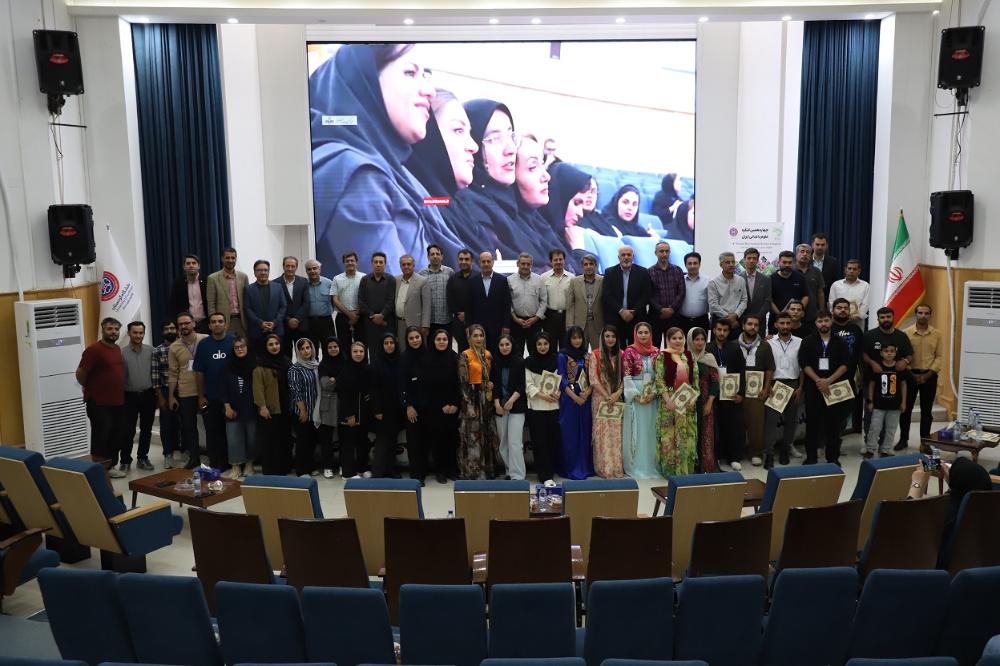



The 14th Iranian Horticultural Science Congress concluded its proceedings on the evening of Wednesday, June 10, 2026, following three days of scientific, specialized, and research sessions.
According to the Public Relations Office of the University of Kurdistan, the congress commenced on Monday, June 8, hosted by the University of Kurdistan in collaboration with the Iranian Society for Horticultural Science. Over the course of three days, it hosted professors, researchers, students, specialists, private sector activists, and representatives from scientific and executive bodies nationwide, as well as several international guests participating both virtually and in person.
Throughout this scientific event, dozens of research papers, specialized lectures, scientific panels, and educational workshops were presented, covering various fields including horticultural sciences, smart agriculture, resource management, modern technologies, and sustainable development.
During the closing ceremony, the Vice President of the Iranian Society for Horticultural Science detailed the final statement of the 14th Iranian Horticultural Science Congress. Mohammad Ali Nejatian stated that the congress, held through the extensive participation of academic and professional stakeholders, provided a valuable platform for knowledge exchange, the presentation of research achievements, and the strengthening of interactions between academia, government, the private sector, and practitioners.
He added that the participants, while expressing gratitude to the organizers and supporters, announced the main axes of the final statement in 11 articles. Referring to the first axis, Nejatian noted that participants emphasized the strategic role of horticulture in food security, public health, employment, and sustainable development, calling for national policies to improve productivity, reduce waste, and increase resilience against climatic and economic crises. Emphasis was also placed on the production of healthy products and the avoidance of unauthorized chemicals.
In the second article, the congress condemned any damage to civilian infrastructure, scientific, research, and educational centers, and systems related to food and agricultural production, emphasizing national and international support for the country’s vital food security and scientific infrastructure. Regarding the third article, Nejatian stated that participants welcomed the plan to support two horticultural innovation laboratories and the establishment of a reference laboratory in Kurdistan Province to monitor and certify the quality of export products.
Furthermore, the development of knowledge-based companies, smart agriculture, biotechnology, artificial intelligence, precision agriculture, post-harvest technologies, and value chain management were among the other key axes emphasized. Participants called for increased support, investment, and the strengthening of the link between industry and academia in these fields.
Highlighting the international dimension, Nejatian mentioned that the presence and speech of the President of the International Society for Horticultural Science (ISHS) were among the highlights of the congress. Participants emphasized expanding scientific and research cooperation with international universities and organizations, including the FAO.
He identified the holding of eight joint specialized sessions with private sector activists, unions, and producers as an innovation of this edition, adding that the results showed that sustainable development in horticulture is impossible without active private sector participation and value chain reinforcement.
Nejatian also addressed environmental challenges, stating that in light of intensifying environmental stresses and water scarcity, participants called for the development of climate-compatible research, the modification of cultivation patterns, the development of smart greenhouses, and the optimization of water and energy consumption.
The statement also highlighted the high potential of Iran’s horticultural products, such as pistachios, pomegranates, figs, almonds, walnuts, saffron, medicinal plants, and ornamental plants, stressing the necessity of developing their value chains and global markets.
Finally, Nejatian cited support for students, young researchers, and scientific elites as another vital axis, calling for the revision and revitalization of horticultural science educational programs to meet the needs of the new generation and technological developments, incorporating skills such as data analysis, AI, and entrepreneurship.

Faculty Systems

Student Systems

Staff Systems

Virtual Tour

Telephone Directory

Privacy Policy Statement
Quick Links
Electronic Services
Useful Links


University of Kurdistan, Pasdaran Boulevard, Sanandaj, Iran

Postal Code: 6617715175

Phone: +988733664600-8

Email: info@uok.ac.ir


site visit
- today:
- yesterday:
- all:
Last Update
08 Jul 2026 - 15:49:52